
Therapist profile: Niki
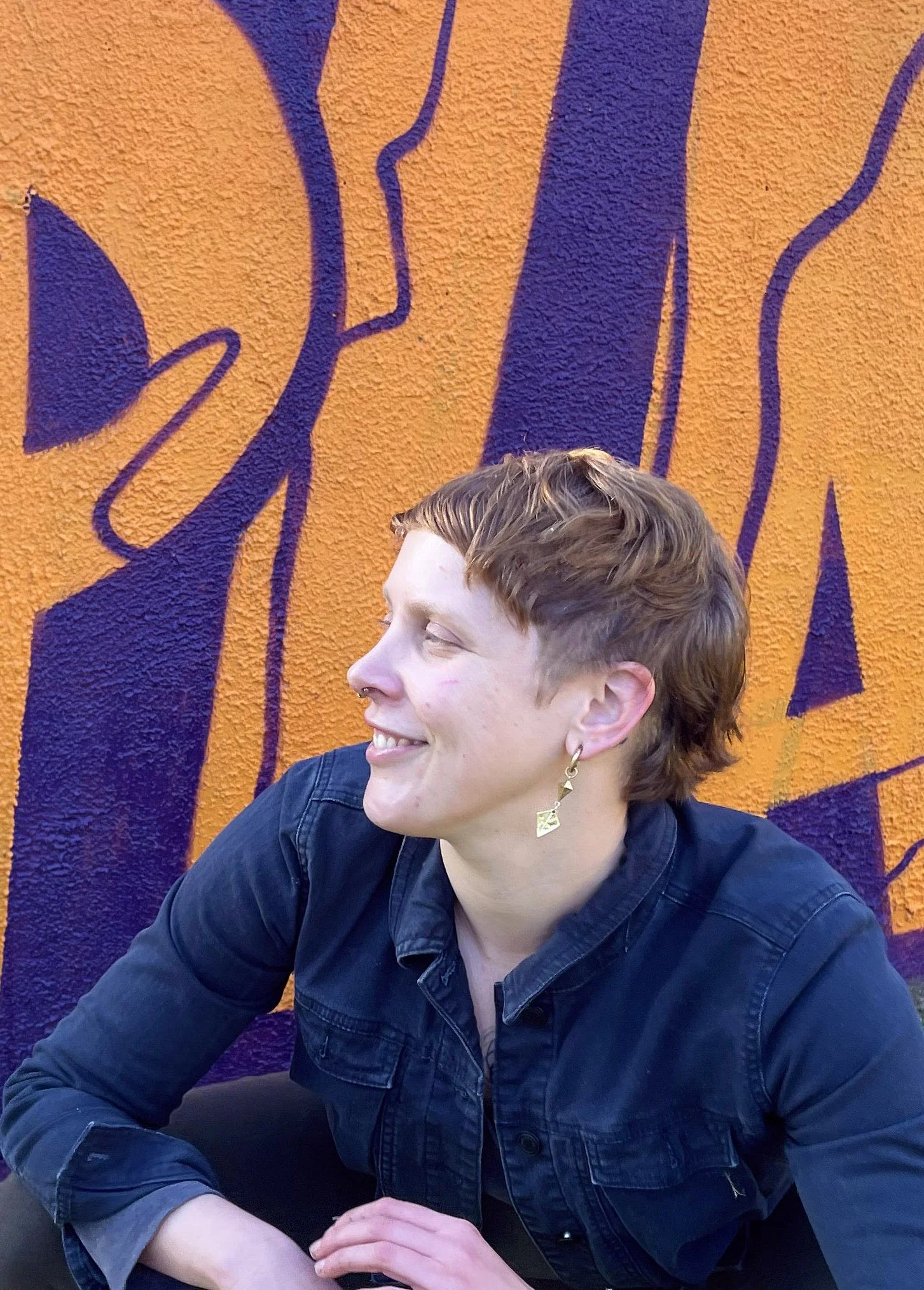
I’m Niki, a fellow human and the therapist at Bodybrains. I help people find their way into a more easeful sense of self with increased capacity for life-doing.
My sessions are individually shaped to support body awareness, attunement to the communal world, and enhanced insight on your terms. While these are natural human functions, help is sometimes needed in actualising them - particularly when the bigger picture includes factors such as sensory amplification, processing differences, chronic stress and/or adverse experiences.
In this role, I accompany people in looking at everyday problems from new angles, and in finding reference points for self-inquiry. This may be particularly relevant for people following an experience that challenges their established worldview. Such experiences can range from grief/loss to non-ordinary states, or simply adapting to a new relational role.
As an allied health clinician, I am also able to partner with people in navigating toward functional changes. For this type of work, my scope is in the realm of building shared insight into the links between emotional, cognitive, physical and behavioural factors, and strengthening coherence and wellbeing across these domains through structured support plans.
Credentials
Master of Creative Arts Therapy* (Dance Movement Therapy) University of Melbourne
B.A. (Hons) in Philosophy; Psychology (Science) University of Sydney
ANZACATA Professional Member* 67560514
*Credential recognised for representation by Allied Health Professions Australia
Influences
Health
I have a firm grounding in clinical practice, including in relation to complex traumatic stress, anxiety and depression, and divergent traits (neurodevelopmental or otherwise), as well as adverse experiences including with institutional structures. I value the insights of peer educators and lived experience consultants. I understand health and healthcare as extending beyond the medical, with other lenses often being appropriate, if not essential.
Philosophy
I see philosophy not something you have, but as something you do - an activity. So, what does it mean to ‘do philosophy’? This is an open and alive question.
What we know is that it’s something to do with the act of inquiry, or posing questions that lead our shared understanding in an appropriate direction. This action can be applied in therapy. What is? How do we know? Is it good?
Science
Like most forms of therapy at the intersection of cognitive, emotional, social and behavioural factors, art therapy has been significantly influenced by psychology and neuroscience. I’m interested in how the sciences use reasoning to identify patterns of coherence in the material world as one piece of a puzzle. Neuroscientific research integrates readily with creative arts therapy practice in a multidisciplinary translational approach.
Art
This is where it gets interesting. Art is so much more than what you see in galleries, museums and mainstream pop culture, and it’s not restricted to people who are ‘good at it’. It does amazing things to our bodybrains, and because of them - both individually and collectively. If you catch me carrying on about Art with a capital A, I’m talking about art as a complex phenomenon that has infinite faces and forms. If you’re not familiar, I’ll be happy to introduce you!